Steam cleaning and hot water extraction are two effective methods for cleaning automotive upholstery and carpets. Both can remove stains and contamination, but they accomplish this differently.
Steam cleaning generally uses less moisture and offers faster drying, while hot water extraction can provide deeper flushing and better removal of embedded contamination.
Neither method is automatically superior. The right approach depends on the material, the severity of the contamination, and the conditions in which the vehicle is being cleaned.
For mobile detailing customers in Dallas, drying time is another important consideration.
What Is Steam Cleaning in Auto Detailing?
Steam cleaning uses heated water vapor to loosen dirt, oils, and stains from upholstery. When combined with appropriate chemicals and agitation, it can be highly effective without saturating the fabric.
At ONYX Detail Collective, we use a steam attachment fitted with a removable cloth cover. Controlled heat and gentle agitation help loosen contamination, which transfers into the cloth. As it becomes soiled, we replace it with a clean cover.
This approach allows us to clean many common upholstery stains while limiting moisture penetration into the underlying padding.
Steam cleaning also offers versatility, but it requires careful control of heat, distance, and exposure time. Not every interior material is suitable for steam.
What Is Hot Water Extraction?
Hot water extraction applies water or a cleaning solution to fabric and uses vacuum suction to recover the liquid along with loosened contamination.
Not every extractor heats its own water, despite the name.
Extraction's primary advantage is its ability to flush and recover contamination from deeper within fabric and carpeting. It can also physically remove more cleaning-product residue than steam cleaning alone.
This makes extraction especially useful for heavily soiled carpets, embedded spills, and situations requiring thorough rinsing.
The trade-off is moisture. Even with effective vacuum recovery, some water may remain in the upholstery and require additional drying time.
Steam Cleaning vs. Extraction: The Key Differences
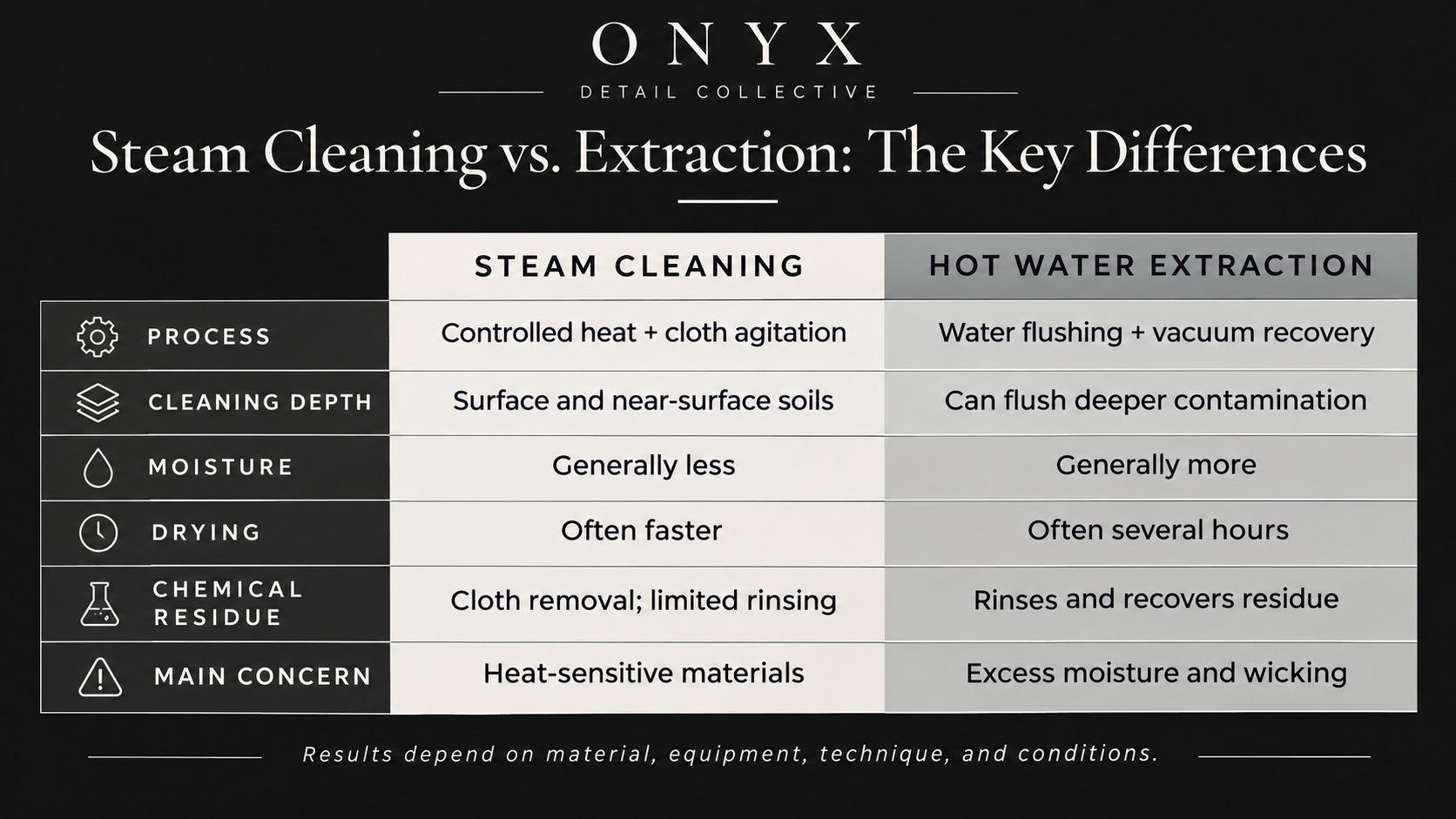
Both methods can deliver excellent results. Equipment quality, cleaning chemistry, technique, and material condition all influence the outcome.
The Four Factors of Cleaning
Effective cleaning depends on four interconnected factors, often described as Sinner's Circle:
Time: Cleaning products need sufficient dwell time to loosen contamination.
Heat: Temperature can improve cleaning effectiveness, although excessive heat may damage sensitive materials.
Agitation: Mechanical action helps separate dirt and stains from fabric fibers.
Chemicals: Appropriate cleaning solutions help break down different types of contamination.
These factors work together. Increasing one may reduce the amount of another required, depending on the task.
Neither steam cleaning nor extraction replaces the need for proper chemistry and technique.
Which Method Removes Stains Better?
For many everyday upholstery stains, steam cleaning can produce results comparable to extraction.
However, the depth of the contamination matters.
A stain confined primarily to the visible fabric may respond well to steam, chemicals, and gentle agitation.
When a spill penetrates into seat foam or underlying carpet padding, extraction may offer an advantage by flushing and recovering contamination from deeper within the material.
Even extraction has limitations. Contamination embedded deep in padding may remain difficult to remove completely.
What Is Stain Wicking?
Wicking occurs when moisture carries dissolved contamination from deeper within upholstery back toward the visible surface during drying.
A stain may appear removed, only to return hours later.
Because controlled steam cleaning generally introduces less moisture, it can reduce some of the conditions associated with wicking.
Extraction requires careful moisture management to minimize this risk, particularly when cleaning heavily contaminated upholstery.
Why Drying Time Matters in Dallas
Drying time is one of the most overlooked differences between steam cleaning and extraction.
And in Dallas, it's particularly relevant.
North Texas has a humid subtropical climate. During humid conditions, moisture evaporates more slowly, especially when airflow is limited.
This creates challenges for upholstery and carpet cleaning.
Many mobile detailing customers don't have access to a garage, professional drying fans, or a secure location where they can leave their vehicle's windows open for hours.
In a drier environment, such as certain inland areas of Southern California, moisture may evaporate more readily under otherwise similar conditions.
In Dallas, we have to account for humidity, temperature, and changing weather.
How Long Does Steam Cleaning Take to Dry?
With our controlled steam-cleaning process, upholstery often dries within approximately 30–60 minutes.
During favorable summer conditions, some surfaces are dry before we finish the appointment.
Actual drying times vary with the fabric, moisture introduced, and surrounding conditions.
How Long Does Extraction Take to Dry?
Hot water extraction may require approximately 1–6 hours or longer, depending on the equipment, vacuum recovery, airflow, and humidity.
A well-operated extractor paired with effective drying equipment can shorten that time considerably.
For customers who need their vehicles back quickly, minimizing moisture can be a meaningful advantage.
A clean vehicle should also be practical to use after the appointment.
That's one reason steam cleaning is currently our preferred upholstery-cleaning method at ONYX.
Can Steam Cleaning Damage Your Interior?
Yes. Steam is effective, but excessive heat or improper application can permanently damage certain automotive materials.
At ONYX, we deliberately avoid steaming several surfaces.
Headliners: Heat and moisture can weaken the adhesives holding headliner fabric in place, potentially causing sagging or separation.
Dashboards and plastics: Sensitive finishes, adhesives, and electronics can be damaged by concentrated heat. We generally avoid steaming these surfaces, although exceptionally dirty vents may receive carefully controlled, brief treatment.
Leather, suede, and Alcantara: These materials require specialized cleaning methods. We avoid steam rather than risk damage or changes in appearance.
Perforated seats: Moisture can enter perforations and potentially reach underlying components.
Glass: Sudden temperature changes can create thermal stress, particularly when glass is cold or already damaged.
Hot water extraction also carries risks. Excessive moisture can remain trapped in upholstery, prolong drying, and create conditions favorable to microbial growth.
Neither method should be used indiscriminately.
Does Steam Cleaning Disinfect Your Car?
Steam can reduce certain microorganisms under appropriate conditions, but routine automotive steam cleaning should not be considered guaranteed disinfection.
Reliable disinfection depends on factors including temperature, exposure time, surface conditions, and validated procedures.
Many automotive materials cannot safely tolerate the sustained heat exposure that may be required.
At ONYX, we focus on effective cleaning and contamination removal rather than making unsupported sanitization or sterilization claims.
What About Cleaning Chemicals and Residue?
Cleaning equipment is only part of the process. The chemicals used—and what happens to them afterward—also matter.
For many upholstery and carpet treatments, we use P&S Carpet Bomber, an alkaline cleaning product.
Following cleaning, we use a diluted citric acid solution that we prepare ourselves to help neutralize residual alkalinity where appropriate.
We also wipe and dry the treated areas with clean microfiber towels, collecting additional loosened dirt, moisture, and some remaining cleaning product.
This reduces residue, but it does not necessarily eliminate it.
There is an important distinction:
Neutralization helps adjust residual acidity or alkalinity.
Physical removal takes away contamination and cleaning chemicals from the material.
Hot water extraction has an advantage here because it can flush and vacuum away dissolved residues more thoroughly.
Our steam-cleaning process uses controlled chemical application, microfiber removal, and appropriate follow-up treatment to manage residues while minimizing moisture.
Can Steam or Extraction Remove Odors?
Both methods can help reduce odors when they remove the underlying contamination.
Steam cleaning may work well for accessible food spills and certain fabric contaminants. Carefully controlled steam can also assist with cleaning some difficult-to-reach areas.
Extraction may be more effective when odor-producing liquids have penetrated deeper into upholstery.
However, neither method guarantees odor elimination.
Pet urine, smoke residue, and other contaminants can penetrate padding, carpet backing, and ventilation systems.
If the source remains, the odor may return.
Effective odor removal begins with identifying and addressing the source rather than simply treating the visible surface.
Why ONYX Currently Prefers Steam Cleaning
At ONYX Detail Collective, steam cleaning is our preferred method for most fabric upholstery treatments.
Our approach combines controlled heat, gentle agitation, appropriate cleaning chemistry, and microfiber removal.
This allows us to address many common stains and soil conditions while limiting moisture and helping customers return to their vehicles sooner.
For a mobile detailing business serving Dallas, that balance is particularly valuable.
But we also recognize the advantages of hot water extraction.
When contamination has penetrated deeper into fabric or padding, extraction may be the more appropriate cleaning method.
We don't believe one machine should dictate every cleaning decision.
The vehicle's condition, material safety, and customer's needs should guide the process.
Frequently Asked Questions
Is steam cleaning better than extracting car seats?
Neither is universally better. Steam cleaning can provide excellent results with less moisture and faster drying. Extraction can offer deeper flushing and better removal of embedded contamination.
Does steam cleaning remove deep stains?
Steam can remove many common stains, but contamination that has penetrated into foam padding may require extraction or additional treatment.
How long do car seats take to dry after extraction?
Depending on equipment, fabric, airflow, and humidity, extraction-cleaned seats may require several hours to dry. Some dry sooner, while heavily saturated upholstery can take longer.
Can steam cleaning damage car seats?
Yes. Excessive heat or improper technique can damage sensitive materials, adhesives, and finishes. Material compatibility and careful application are essential.
Does steam cleaning leave chemical residue?
It can. Using clean microfiber towels helps remove some remaining chemicals and contamination, while appropriate follow-up treatments can help manage residual alkalinity. Extraction provides more thorough physical rinsing and recovery.
Which method is better for mobile detailing in Dallas?
Both can be effective. Steam cleaning offers practical advantages when drying time and moisture control are priorities, particularly during humid weather. Extraction may be preferable for deeper contamination.
Final Thoughts: The Right Method for the Right Vehicle
Steam cleaning and hot water extraction both have an important place in professional automotive detailing.
Extraction provides valuable deep-cleaning and rinsing capabilities. Steam cleaning offers effective cleaning for many common upholstery conditions with less moisture and faster drying.
The best approach considers more than which machine can remove the most dirt. It also considers the materials, the environment, and how the vehicle will be used afterward.
At ONYX Detail Collective, we believe exceptional care means choosing the appropriate method for each situation—not simply the most aggressive one.
A higher standard of care, brought to your door.
ONYX Detail Collective provides professional mobile interior detailing throughout Dallas and surrounding communities. Learn more about our Interior Detailing services and our approach to maintaining your vehicle with consistent, thoughtful care.
